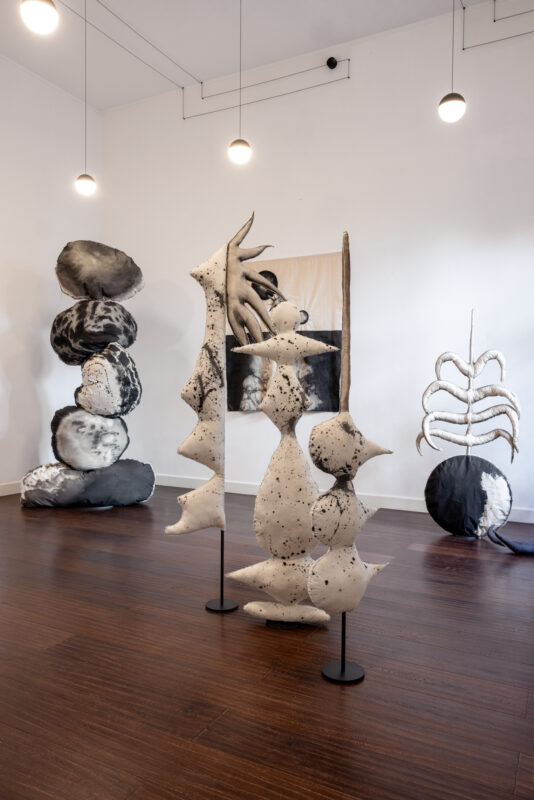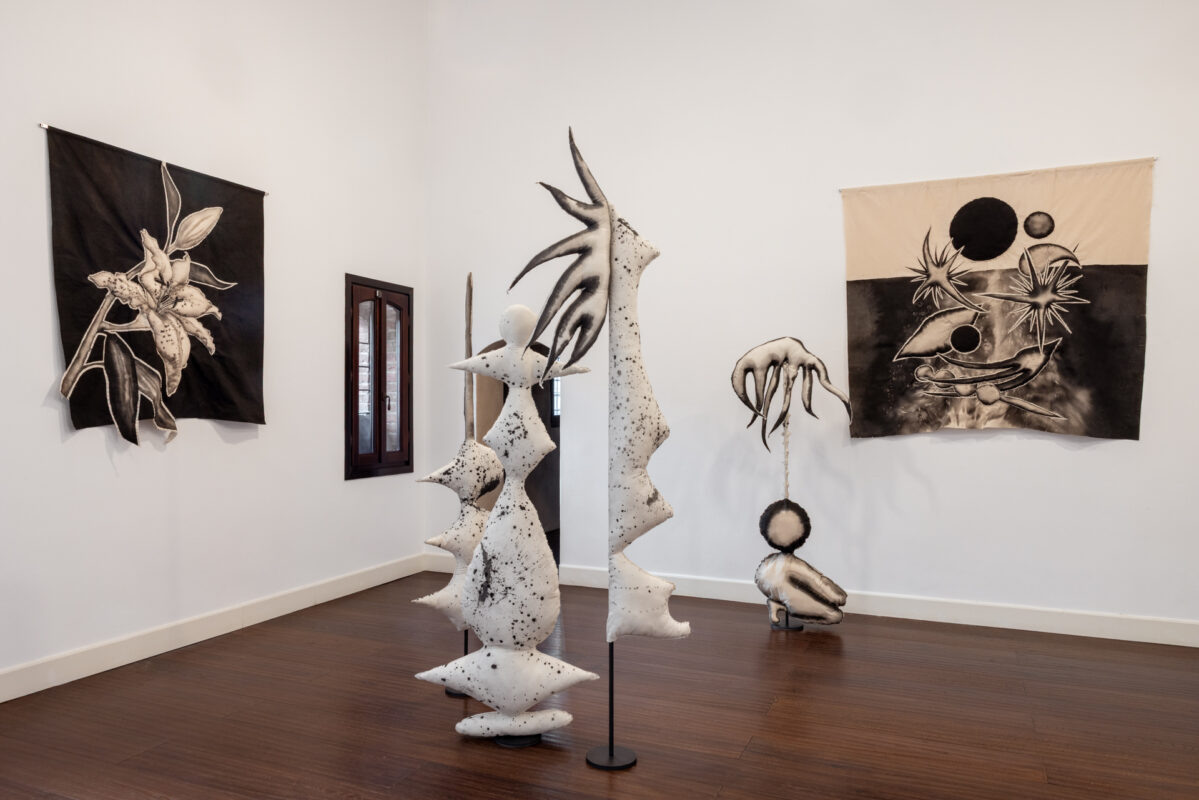
From 24 September 2026 to 22 January 2027, Antonini Milano at Palazzo Borromeo presents Resonance, a solo exhibition by Korean artist Sang A Han, curated by Maria Vittoria Baravelli and organized in collaboration with Galleria Fumagalli.
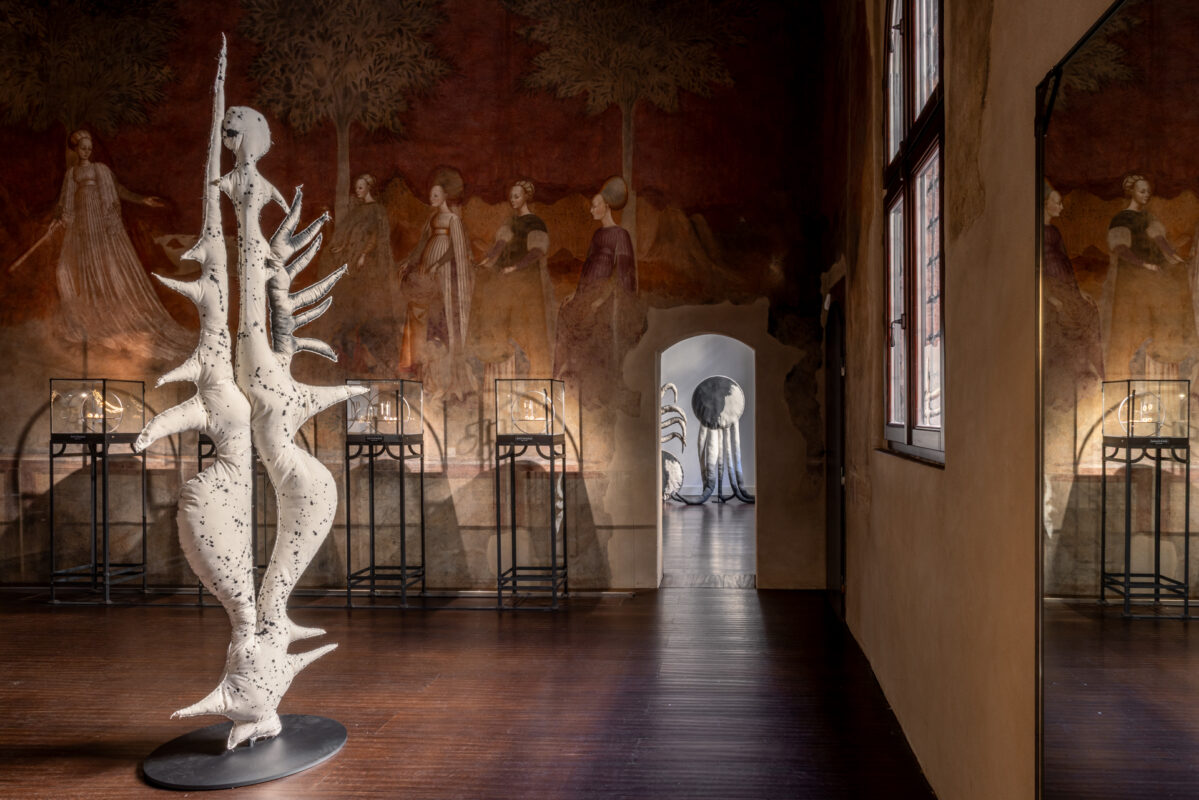
Within the evocative spaces of Palazzo Borromeo, the works of Sang A Han (Seoul, South Korea, 1987) engage in dialogue with a site where images have, for centuries, served as instruments of memory, representation, and identity. The fifteenth-century frescoes of the Sala dei Giochi – rooted in courtly culture and the symbolic construction of social status – transformed the walls into narrative surfaces. The images not only tell the story of a family, but also express its role, its visual language, and its sense of belonging to a specific world.
Within the exhibition, Sang A Han expresses an opposite yet complementary statement: her works are not created to project identity outward, but to allow to bring out intimate memories, inner landscapes, dreams, emotions, and traces of a feminine knowledge inherited and transformed.
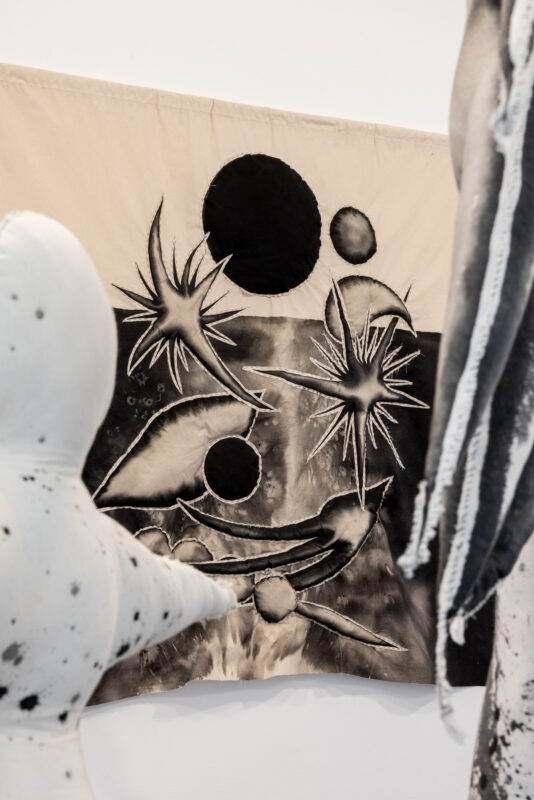
Through the use of Meok, the traditional Korean ink, together with fabric, needle, and thread, the artist creates symbolic works in between painting and sculpture, appearance and personal archive. Her works seem to emerge from a more intimate, almost psychic dimension. Rather than representing a status, they embody an inner process, making visible what usually remains concealed: familial transmission, the memory of the body, and the expression of the
unconscious.
Resonance becomes a meeting point between different expressions of intimacy. On one hand, the frescoed walls of Palazzo Borromeo depict an elite that stages its own identity through play, gesture, ritual, and the elegance of courtly culture. On the other, Sang A Han creates presences
that emerge from deep inward listening, ritual repetition, dreamlike memory, and acts of care.
Within this context, sewing – learned by the artist through the women of her family – assumes a central significance. It is not merely a technique, but a genealogy. Every stitch becomes the mark of a feminine, domestic, and silent transmission; every ink-soaked surface preserves a memory that does not seek monumentality, but profoundness.
The urban context surrounding Palazzo Borromeo further emphasizes the tradition of craftsmanship. The street names of Milan’s historic centre still preserve the memory of artisanal trades – Via Orefici, Via Zecca, Via Spadari, and Via Armorari – presenting a city shaped not only by architecture but also by the intelligence and skill of human hands. Within this landscape of gestures, materials, and inherited knowledge, Sang A Han introduces another form
of manual practice: one that is intimate, ancestral, transformative, and ritualistic, capable of translating memory into a tangible presence.
At Palazzo Borromeo, the encounter between fresco and sculpture unfolds as a dialogue between two cultural identities. Collective and personal memories intertwine, creating a conversation that bridges cultures and historical epochs.